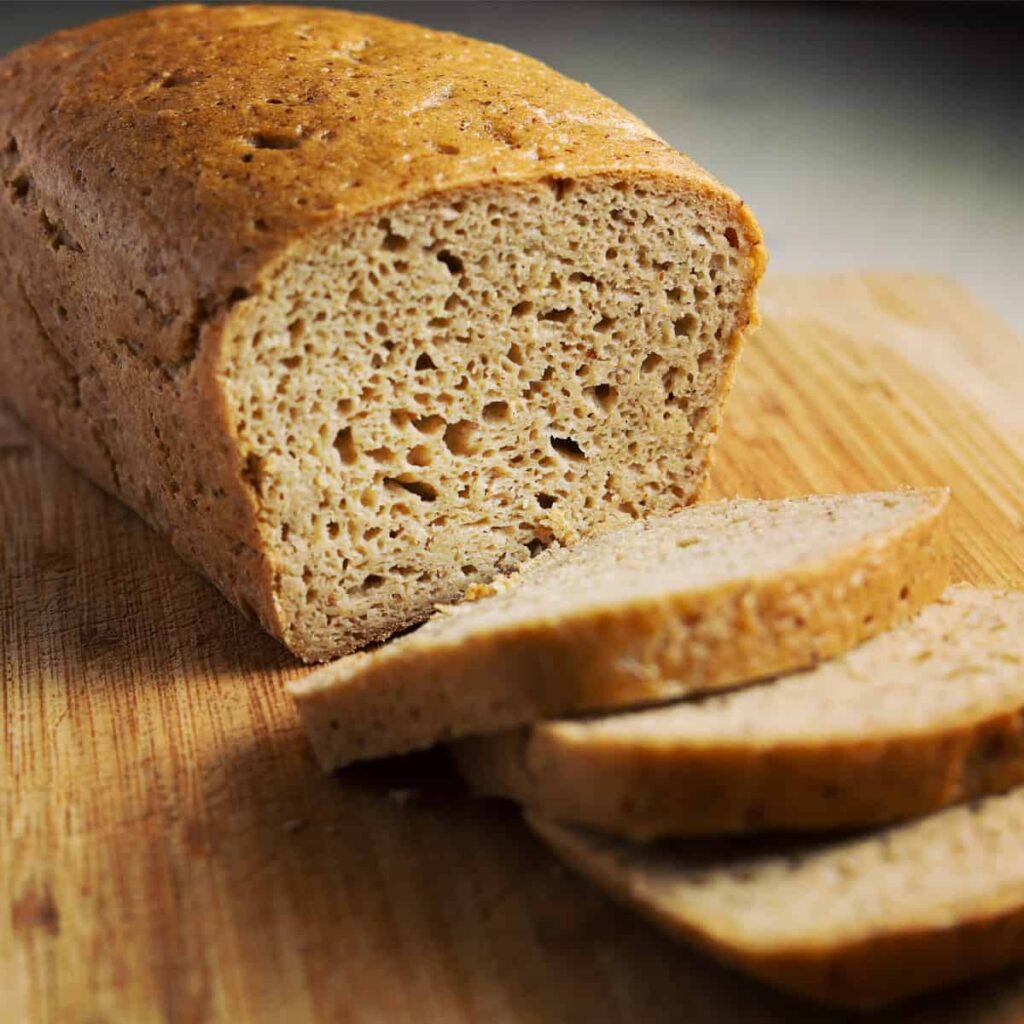

Traditional bread relies on gluten (a protein found in wheat, barley, and rye) to provide elasticity, structure, and chewiness. In gluten-free baking, we must recreate these properties using a combination of gluten free flours, starches, and binding agents like xanthan gum or psyllium husk.
Gluten-free bread dough is typically more like a thick batter than a kneadable dough. Don’t worry—that’s completely normal.
🧾 Ingredients
Dry Ingredients
- 2 cups gluten-free all-purpose flour blend
- 1 cup brown rice flour
- ½ cup tapioca starch (or tapioca flour)
- ¼ cup potato starch (not potato flour)
- 2 teaspoons xanthan gum (or 1 tablespoon psyllium husk powder)
- 1 teaspoon salt
- 2 tablespoons sugar (or honey/maple syrup alternative)
Wet Ingredients
- 1 ½ cups warm water (around 38–43°C / 100–110°F)
- 2 ¼ teaspoons active dry yeast (1 standard packet)
- 2 large eggs (room temperature)
- ¼ cup olive oil (or melted butter)
- 1 teaspoon apple cider vinegar
🍞 Equipment Needed
- Large mixing bowl
- Stand mixer or hand mixer (recommended)
- 9×5 inch loaf pan
- Measuring cups and spoons
- Spatula
- Clean kitchen towel or plastic wrap
👩🍳 Step-by-Step Instructions
Step 1: Activate the Yeast
In a small bowl:
- Combine warm water and sugar
- Sprinkle yeast over the top
- Let it sit for 5–10 minutes
You’ll know it’s ready when it becomes foamy. If it doesn’t foam, your yeast may be inactive.
Step 2: Mix Dry Ingredients
In a large bowl:
- Combine gluten-free flour blend, rice flour, tapioca starch, potato starch
- Add xanthan gum and salt
- Mix thoroughly to ensure even distribution
This step is important because gluten-free flours behave differently and must be evenly blended.
Step 3: Combine Wet Ingredients
In another bowl:
- Beat the eggs lightly
- Add oil and vinegar
- Mix until combined
Step 4: Make the Dough
- Add the yeast mixture and wet ingredients into the dry ingredients
- Mix using a stand mixer (medium speed) for about 3–5 minutes
The mixture should resemble thick cake batter—not traditional dough.
Step 5: Transfer to Pan
- Grease your loaf pan well
- Pour the batter into the pan
- Smooth the top with a spatula
Optional: Lightly oil your hands or spatula to prevent sticking.
Step 6: Let It Rise
- Cover with a towel or plastic wrap
- Let it rise in a warm place for 30–45 minutes
The dough should rise to just above the top of the pan.
Step 7: Bake the Bread
- Preheat oven to 180°C (350°F)
- Bake for 40–50 minutes
The bread should:
- Be golden brown on top
- Sound hollow when tapped
Optional: Use a thermometer—the internal temperature should reach about 93°C (200°F).
Step 8: Cool Completely
- Remove from the pan after 10 minutes
- Let it cool on a wire rack for at least 1 hour
This step is crucial—cutting too early can make the bread gummy.
🔍 Tips for Best Results
✔ Use a Good Flour Blend
Not all gluten-free flours are equal. A mix of whole grain and starches works best.
✔ Don’t Skip the Binder
Xanthan gum or psyllium husk replaces gluten’s structure.
✔ Hydration is Key
Gluten-free dough needs more moisture than regular dough.
✔ Avoid Overbaking
Too much baking can dry out the bread.
✔ Storage Tips
- Store in an airtight container for up to 3 days
- Refrigerate for up to 1 week
- Freeze slices for up to 3 months
🍽️ Variations
🌿 Herb Bread
Add:
- 1 tablespoon dried herbs (oregano, basil, rosemary)
🧄 Garlic Bread
Add:
- 1 teaspoon garlic powder
- Brush with garlic butter after baking
🍯 Sweet Bread
Add:
- Extra 2 tablespoons sugar or honey
- ½ teaspoon cinnamon
🧮 Nutritional Chart (Approximate per Slice)
(Assuming 12 slices per loaf)
| Nutrient | Amount per Slice |
|---|---|
| Calories | 180–200 kcal |
| Carbohydrates | 30–35 g |
| Protein | 4–5 g |
| Fat | 5–7 g |
| Fiber | 2–3 g |
| Sugar | 3–5 g |
| Sodium | 150–200 mg |
| Cholesterol | 25–35 mg |
🥗 Nutritional Insights
✔ Gluten-Free Benefits
- Suitable for people with celiac disease or gluten intolerance
- Easier digestion for sensitive individuals
✔ Energy Source
- High in carbohydrates, making it a good energy source
✔ Moderate Protein
- Eggs contribute to protein content
✔ Fat Content
- Healthy fats from olive oil support heart health
⚠️ Considerations
- Gluten-free bread is often lower in protein than wheat bread
- Can be higher in starch, so portion control is important
- Adding seeds (chia, flax, sunflower) can boost nutrition
🌟 Final Thoughts
Making gluten-free bread at home might seem intimidating at first, but once you understand the process, it becomes straightforward and rewarding. The key differences lie in texture, hydration, and structure—but with the right balance, you can achieve a soft, delicious loaf perfect for sandwiches, toast, or snacks.
Homemade gluten-free bread is not only fresher and tastier but also allows you to control ingredients—avoiding preservatives and customizing flavors to your liking.